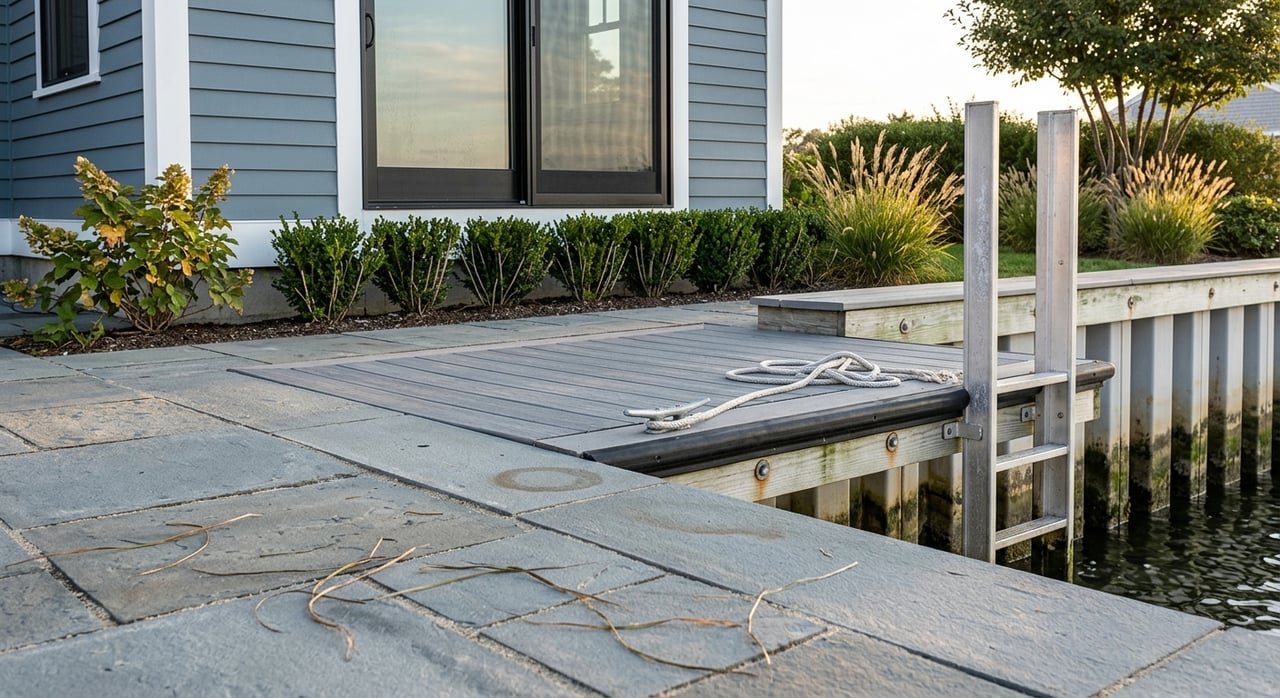
If you are dreaming about a waterfront home in Great River, you are probably picturing peaceful views, private shoreline access, and a slower pace that feels different from a typical suburban block. That appeal is real, but waterfront buying here also comes with extra layers that can affect your budget, plans, and timeline. The good news is that when you know what to check before you commit, you can move forward with far more confidence. Let’s dive in.
Why Great River waterfront stands apart
Great River is a hamlet in the Town of Islip in Suffolk County, and its setting helps explain why waterfront homes here feel distinct. Town planning materials describe Great River as the least dense hamlet in Islip, with 795 people per square mile and about 7% of the town’s land area. That lower-density pattern, along with its ties to the Connetquot River and estate-style development, creates a very different buying experience than a standard neighborhood search.
For you as a buyer, that usually means each property deserves close, address-specific review. A waterfront home in Great River may have very different flood, wetlands, shoreline, or wastewater issues than another home just a short distance away. In this market, the parcel matters just as much as the house.
Start with flood-zone verification
One of the first things to confirm is whether the property falls in a Special Flood Hazard Area. The Town of Islip says these highest-risk areas appear on FEMA maps in Zones A and V, primarily in coastal parts of the Great South Bay and Fire Island. Because maps can change over time, it is smart to verify the exact address instead of relying on what a listing, neighbor, or old memory suggests.
The Town provides a Flood Zone Determination Request Form and an online map view for parcel review. That makes flood-zone verification an early due diligence step, not something to leave until the end. If you are considering a shoreline or near-shore property, this check should happen as soon as serious interest begins.
Why flood zones affect your costs
Flood zones are not just a map issue. They can directly affect insurance requirements and monthly carrying costs. FEMA states that homes in high-risk flood areas with government-backed mortgages are required to carry flood insurance, and standard homeowners insurance generally does not cover flood damage.
That means the purchase price is only one part of the waterfront budget. You also need to understand whether flood insurance is likely to be required and how that cost fits into your overall payment. Since FEMA fully implemented Risk Rating 2.0 in April 2023, premiums are based on property-specific factors like elevation, distance from flooding sources, and building characteristics.
Ask about the elevation certificate early
An elevation certificate can be an important document for waterfront buyers. FEMA uses it as an administrative tool for National Flood Insurance Program compliance and insurance, and local permit files in Special Flood Hazard Areas rely on elevation information. In practical terms, that means you should ask early whether the seller already has a current survey and elevation certificate.
If those documents exist, they may help you understand the property more quickly. If they do not, that can signal the need for more investigation before you move forward. Either way, asking the question early can save time and surprises.
Review docks, bulkheads, and shoreline structures
Many buyers focus on the view first and the shoreline structures second. In Great River, that order should be reversed. If a property has a dock, bulkhead, seawall, boat slip, or other shoreline improvement, you need to know what exists legally, what condition it is in, and what approvals may be required for future work.
New York State DEC says tidal wetlands line much of Long Island’s saltwater shore, bays, inlets, canals, and estuaries. DEC rules cover activities such as docks, bulkheads, seawalls, dredging, excavation, grading, septic systems, and related shoreline structures. The adjacent regulated area can extend up to 300 feet inland from the wetland boundary, so even work that looks minor may trigger review.
Small repairs and bigger changes are different
It is important to know that maintenance and modifications are not treated the same way. DEC says replacing broken boards on a functional dock is generally exempt, but changing the dock’s length, width, or position is not. DEC also notes that many residential docks may be exempt from Protection of Waters permit requirements, but that exemption does not apply when the work is within regulated freshwater or tidal wetland areas.
For you, that means a simple question matters: are you buying a waterfront feature you can maintain easily, or one that may require permits for even modest updates? The answer can shape both your ownership costs and your long-term plans.
Great River properties may need multiple approvals
In the Town of Islip, another layer applies. If a property is in a wetlands area or flood zone, the Town requires a Wetlands and Watercourses Permit. The Planning Division determines whether NYSDEC approval is also needed, and plans are reviewed for FEMA compliance.
Some projects may also require county or state work permits if access or frontage involves a county or state right-of-way. In some cases, the U.S. Army Corps of Engineers may also have separate jurisdiction. This is why waterfront due diligence in Great River is often about coordination, not just inspection.
Bulkhead replacement needs careful review
Bulkheads deserve especially close attention because replacement is not always simple. DEC offers a general permit for certain tidal wetland bulkhead replacement projects with dredging in Nassau and Suffolk counties, but the permit does not apply everywhere. It excludes high-wave-energy areas, vegetated tidal wetlands, submerged aquatic vegetation beds, and marsh island communities.
DEC also says authorization is not active until a signed project authorization is issued. Applications typically need a site map, survey showing the existing bulkhead, photos, and a permission-to-inspect form. If a bulkhead looks old or compromised, you should factor both cost and permitting into your buying decision.
Confirm dock and bay-bottom rights
Not every waterfront benefit comes automatically with the deed. The Town of Islip says its Bay Bottom Licensing Program covers more than 1,500 acres of Town-owned bay bottom. That means some docks, moorings, or waterfront uses may depend on a town license or separate rights.
If a property includes water access features, confirm exactly what rights transfer with the sale. You want to know whether the use is fully tied to the parcel, depends on a separate license, or may need additional review. This is one of those details that can feel small at first and very important later.
Check sewer or septic status carefully
One of the biggest assumptions buyers make is that an expensive waterfront home must already be sewer-connected. In Great River, that is not always the case. Suffolk County says voters in Oakdale and Great River approved the Great River Sewer Expansion, which will connect 400 homes to the Southwest Sewer District and use grants to cover connection costs.
That makes sewer status a live issue right now. Some homes may already be connected, some may be eligible for connection, and some may still rely on older septic systems or cesspools. Before you buy, make sure you know which category the property falls into.
Why wastewater status matters
Wastewater infrastructure affects more than convenience. It can influence future improvement plans, maintenance needs, and potential replacement costs. Town permit guidance adds that Suffolk County Department of Health Services approval to construct is required before permit issuance, even if the property is in the sewer district.
That means your due diligence should go beyond asking whether a sewer line is nearby. A better question is whether the parcel is already connected, approved for connection, or still dependent on a system that may need major work.
Grants may exist for eligible replacements
If a property still uses septic or a cesspool, there may be assistance available for qualified replacements. Suffolk County’s Septic Improvement Program currently offers a $20,000 county grant and up to $25,000 from New York State for eligible systems. The county says the property must already be served by septic or cesspool, not be connected to a sewer system or located within a proposed sewer district, and must meet ownership, deed, tax, and certificate-of-occupancy requirements.
The county also notes that properties in environmentally sensitive areas are prioritized, and grant-funded systems must be maintained at least once per year by a licensed service provider. For buyers, this does not replace due diligence, but it does show why the exact status of the parcel matters.
Focus your due diligence on the parcel
In a standard home purchase, buyers often focus on condition, layout, and price. In Great River waterfront purchases, parcel review should sit right alongside those basics. The Town of Islip’s permit materials require items such as a signed and sealed plot plan by a New York licensed architect, engineer, or surveyor, and in some cases a foundation as-built survey during construction work.
The Town’s Planning Division materials also include both flood-zone and wetlands-related forms. That local approval structure makes one thing clear: survey review, flood verification, wetland review, and permit history are part of normal waterfront due diligence here. They are not extras.
A practical waterfront checklist
Before you commit to buying a waterfront home in Great River, make sure you have answers to these questions:
- Is the exact address in a Special Flood Hazard Area?
- Is flood insurance likely to be required for your financing?
- Does a current survey exist?
- Is there an elevation certificate on file?
- Are there wetlands constraints on or near the parcel?
- Are the dock, bulkhead, seawall, or other shoreline structures permitted?
- If repairs are needed, what approvals may be required?
- Are any waterfront rights tied to a town bay-bottom license or other separate right?
- Is the home connected to sewer, eligible for connection, or still on septic or cesspool?
- What does the permit history show for past improvements?
These questions can help you compare properties more clearly. They can also help you avoid falling in love with a view before you understand the obligations that come with it.
Why local guidance matters
Buying waterfront in Great River is rarely just about choosing the prettiest property. It is about understanding how flood risk, insurance, shoreline features, permit history, and wastewater infrastructure all fit together. When those pieces are reviewed early, you can make a decision based on facts instead of assumptions.
That is where calm, local, hands-on guidance can make a real difference. If you are exploring waterfront homes in Great River and want a clear, practical approach to the process, Caroline Sweezey can help you evaluate the details that matter before you make your move.
FAQs
What makes buying a waterfront home in Great River different from buying another home?
- Great River waterfront purchases often require closer review of flood zones, wetlands, shoreline structures, permit history, and sewer or septic status because parcel-specific issues can strongly affect cost and usability.
What should you verify first when buying a Great River waterfront home?
- You should start with address-level flood-zone verification through Town of Islip and FEMA resources, then review survey, elevation, wetlands, and permit history.
Does a Great River waterfront home always need flood insurance?
- Not always, but FEMA says homes in high-risk flood areas with government-backed mortgages are required to carry flood insurance, and standard homeowners policies generally do not cover flood damage.
Can you change a dock or bulkhead at a Great River waterfront property without permits?
- Not necessarily, because DEC says many shoreline activities are regulated, and even if simple repairs may be exempt in some cases, changes to a dock’s size or position and many bulkhead projects can require review and approval.
How do you check sewer or septic status for a Great River waterfront property?
- You should confirm whether the parcel is already connected to sewer, eligible for connection through the Great River Sewer Expansion, or still dependent on septic or a cesspool that may need replacement or approvals for future work.